
iHerb: Vitamins & Supplements
iHerbShopping
4.77.14K Reviews
- Version
- 12.8.0820
- Installs
- 10.00M
- Age Rating
- Mature 17+
Screenshots

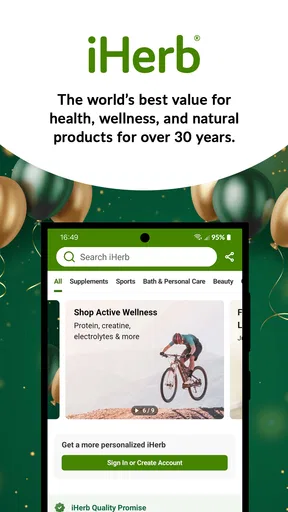
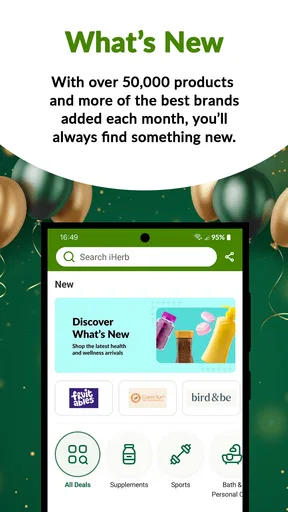

Our Review of iHerb: Vitamins & Supplements
 Analysis by Appyee
I use shopping apps differently when the products relate to health. With ordinary household items, a slow search or an awkward checkout is merely annoying. With vitamins, supplements, personal care products, and active-nutrition items, I also want clear product information, a manageable account experience, and enough control to decide what I am comfortable sharing. That is the lens I applied to iHerb: Vitamins & Supplements, a free shopping app from iHerb.
My overall impression is that it is most useful for people who already know the kind of wellness product they want and prefer browsing a broad specialist catalog on a phone. It can make repeat purchases easier than visiting several unrelated shops, but it is not a substitute for medical advice, and it is not automatically the best choice for every purchase. The app’s strong public reception—an average of 4.7 from around 737 thousand ratings—suggests that many shoppers find the experience dependable, while my own view is more measured: its value depends heavily on how carefully you check labels, delivery details, and account choices.
What the app is really for
I find that the best way to approach this storefront is to decide what I need before browsing, then use its product details to check that I have the right form and package. That simple routine keeps a broad wellness catalog from turning into aimless scrolling. From there, I look at which choices are worth reviewing before an order, especially when convenience might otherwise make me move too quickly.
A specialist storefront rather than a general marketplace
The app sits in the Shopping category and is developed by iHerb. Its focus is narrower than a general marketplace: vitamins and supplements are central, but the catalog also covers active nutrition, personal care, and other wellness-oriented products. That focus matters because the browsing experience makes more sense when you are comparing formulations, sizes, flavors, or product types rather than looking for unrelated everyday goods.
I would recommend starting with a specific shopping goal. For example, if I need to replace a familiar supplement, I can search for the product and then inspect the listing instead of wandering through a huge general store. If I am only browsing, the range can become distracting. Wellness categories often contain similar names and overlapping claims, so the app is easier to use when I have already decided which ingredients, format, or brand characteristics matter to me.
The app has been available since November 22, 2013, and its reach is substantial, with more than 10 million installs. That history and scale make it feel like an established shopping destination rather than a temporary niche storefront. Still, popularity should not be confused with suitability. A large user base can tell me that the app is widely used; it cannot decide whether a particular supplement is appropriate for my diet, medication, allergies, or health condition.
Where it fits into an everyday routine
A realistic use case is a monthly restock. I might notice that I am nearly out of a familiar product, open the app, search by its name, check the serving information and package size, and compare the available option with what I bought previously. That is more convenient than trying to remember the exact product while standing in a physical shop. I can also use the same routine for personal care items or sports-nutrition products, keeping several related purchases in one basket.
The trade-off appears when the purchase is urgent. A nearby pharmacy or supermarket may be better if I need something today or want to speak with a professional before buying. The app is designed for shopping, not immediate consultation. I would also be cautious about using it for a first-time supplement purchase based only on attractive descriptions or user enthusiasm. The more unfamiliar the product, the more time I would spend reading the label and checking whether it fits my needs outside the app.
Reading listings with the right level of skepticism
One of the most important habits is to treat the product page as a starting point for checking, not as a final recommendation. I look for the exact product form, quantity, serving guidance, ingredient list, allergen information, and any warnings displayed on the listing or packaging. Similar product names can hide meaningful differences, such as capsules versus powder or a different strength, so I do not rely on the first matching title.
I also compare the package size with the suggested serving rather than judging value from the headline price alone. A larger container is not necessarily better value if the serving size is higher, and a cheaper option may not be equivalent to the product I intended to replace. This is a small but useful workflow: identify the active ingredient or product purpose first, then compare the actual quantity and format.
What makes it different from usual alternatives
Compared with a general online marketplace, iHerb feels more focused on wellness shopping. That can reduce the effort of filtering out unrelated products, especially when I am looking across supplements, active nutrition, and personal care in the same session. Compared with a local store, it offers a more relaxed research process and makes repeat browsing practical from home.
The alternatives remain important. A local retailer is often preferable for immediate availability, physical inspection, or face-to-face help. A manufacturer’s own store may be a better place when I want to verify a brand-specific range directly. A general marketplace can be more convenient when I am combining supplements with ordinary household purchases. I see iHerb as strongest in the middle: a specialist online catalog for planned shopping, not the universal answer to every health-related purchase.
Trust, controls, and moments that deserve care
I treat privacy and purchase checks as part of the same careful routine: saved details, notifications, and the final basket can all shape how comfortable an order feels. My aim is to make each decision deliberate without turning ordinary restocking into a chore. The next section looks at the practical controls and shopping moments I would pause over before relying on the app regularly.
What I look for before creating or using an account
Because this is a shopping app, I pay attention to the difference between browsing and committing to an account. Before signing in, I would inspect what can be viewed without registration and what requires account access. I also prefer to use only the information needed to complete an order, rather than filling in optional profile details automatically. This keeps the shopping relationship easier to understand and gives me a clearer boundary between purchasing and personalization.
Account controls matter most after the first order. I would look for a way to review saved delivery details, payment choices, order history, and communication preferences, then remove anything I no longer need. I would also check whether promotional messages can be adjusted separately from essential order updates. Those are practical choices, not technical details: they determine whether the app remains a useful storefront or gradually becomes a source of unwanted reminders.
I do not treat a familiar brand name or a high rating as proof that every privacy choice is ideal. My approach is simple: read the permission prompts, review the privacy and account screens in the app, and decline optional access when it is not needed for the task. If a feature asks for more information than I expect for shopping, I pause instead of accepting automatically.
Data-sensitive moments during shopping
The most sensitive moments are not necessarily the product search itself. They are signing in, saving an address, storing payment information, receiving order notifications, and viewing purchase history. A supplement order can reveal personal interests or health concerns, even when the shopper never writes a diagnosis anywhere. I therefore avoid putting unnecessary medical details into account fields, notes, or messages.
Search behavior deserves similar care. I may search for a product because of a temporary concern, a gift, or general curiosity, and I do not want to assume that every search should become part of a long-term profile. When I am researching something personal, I pay attention to whether the app offers clear ways to manage history or personalization. If the available choices are not obvious, I keep my searches more general and use independent medical sources for health questions.
Notifications are another small but overlooked issue. A lock-screen message that names a product can expose more than I intended to anyone who sees my phone. I would review notification settings and choose a less revealing display when possible. I also keep order emails and receipts organized separately from promotional messages, which makes it easier to identify a real delivery update without opening every marketing communication.
How I judge user agency
User agency means being able to make an informed choice without being pushed through a confusing path. In this app, I would take time to inspect the basket before paying: product name, variant, quantity, delivery destination, and final total should all match my intention. I would not assume that a familiar-looking image represents the exact size or formulation I selected.
I also treat recommendations as suggestions rather than instructions. A related product can be useful when it solves a real need, but it can also make a planned restock larger than intended. My practical rule is to add an item only if I can explain why I need it. This is especially important with supplements, where buying several overlapping products can create unnecessary duplication.
For repeat orders, I would keep a personal record of what I bought and why, rather than relying entirely on the app to remember my routine. That makes it easier to spot a changed package, a different serving direction, or a product I no longer want. It also prevents convenience from turning into automatic purchasing without a fresh check.
Version, compatibility, and the basic app experience
The current version is 12.8.0820, and the app requires Android 9 or later. That makes compatibility worth checking before planning to use it on an older phone. I would update the operating system and the app through the normal official channel, especially for a shopping app that handles account and order information.
The app is free to download and carries a Mature 17+ content rating. The free price removes an obvious barrier to trying the storefront, but it does not mean shopping is cost-free: the products, delivery, and any applicable checkout charges still determine the real expense. I would always review the final order summary rather than making a decision from a product tile or an early browsing screen.
One useful habit is to separate technical convenience from purchasing confidence. A smooth search, a saved address, or a familiar interface can make an order feel easy, but none of those confirms that the selected supplement is right for me. I use the app for catalog access and order management, while I use reliable health guidance for questions about safety, interactions, or dosage.
Who should use it and who should skip it
I think the app is a good fit for an organized shopper who regularly buys wellness products online, wants several related categories in one place, and is willing to read labels carefully. It is also useful for someone who prefers planned restocking over spontaneous visits to multiple stores. The broad install base and strong rating reinforce that it has become a familiar option for many shoppers, though I still judge each order on its own details.
I would skip it, or at least choose another route, if I need urgent treatment, personal medical guidance, or a product immediately from a nearby shop. I would also avoid relying on it as my only source of information when I have allergies, take prescription medicine, are pregnant, or are buying for a child. In those situations, a pharmacist, clinician, or specialist source should come before a shopping decision.
It is not the ideal choice for someone who dislikes online account management or wants to inspect packaging in person. A physical retailer can make questions about availability and presentation easier. Likewise, a brand-direct store may be more suitable when I am committed to one manufacturer and want a narrower selection. iHerb earns its place when variety and planned online shopping matter more than immediate personal assistance.
My cautious verdict
I find iHerb: Vitamins & Supplements useful when I approach it as a focused shopping tool rather than a health adviser. Its specialist range, established presence, and free access make it convenient for comparing and restocking vitamins, active-nutrition products, and personal care items. The best experience comes from entering with a clear goal, checking the exact product details, and reviewing the basket before payment.
My trust in the app is practical rather than automatic. I would review permissions, account controls, saved information, notifications, and privacy choices as part of normal use. I would also keep sensitive health reasoning out of unnecessary account fields and avoid assuming that recommendations or popularity equal medical suitability. The most responsible way to use this app is to keep shopping convenience separate from health judgment.
For planned purchases, I would recommend giving it a try, especially if a specialist wellness catalog is more useful to you than a general marketplace. For urgent needs, complex health questions, or shoppers who want in-person guidance, another option is likely better. Used with that distinction in mind, the app is a capable storefront with meaningful convenience, provided I remain the one making the final informed choice.
Verdict
Strengths of iHerb: Vitamins & Supplements
- Huge selection of vitamins, supplements, beauty, and wellness products.
- Detailed ingredient lists and customer reviews help with product research.
- Frequent discounts, promotions, and loyalty rewards can reduce costs.
- International ordering is available in many countries.
- Convenient subscription options help restock regularly used products.
Limitations of iHerb: Vitamins & Supplements
- Product availability and shipping options vary significantly by country.
- Some popular items may sell out or become temporarily unavailable.
- International orders may involve customs fees, taxes, or import delays.
- The large catalog can make choosing between similar products confusing.
- Delivery times may be longer for orders shipped from overseas.
Similar Picks in This Category
View All
SHEIN-Shopping Online
Roadget Business PTE. LTD.4.8

Amazon Shopping
Amazon Mobile LLC4.4


Mercado Libre: Compras online
Mercado Libre4.8

Wish: Shop and Save
Wish US Holdings LLC4.7

Alibaba.com - B2B marketplace
Alibaba Mobile4.4
Frequently Asked Questions
What is iHerb: Vitamins & Supplements, and what can I buy through the app?
iHerb: Vitamins & Supplements is a shopping app focused on vitamins, dietary supplements, sports nutrition, beauty products, personal care items, and selected natural or wellness products. After installing it, users can browse categories, search by brand or ingredient, read product information and customer reviews, compare prices, save favorites, and place orders for delivery. Product availability, pricing, promotions, and shipping options may vary depending on your country.
Is the iHerb app safe to use for buying vitamins and supplements?
The app provides a convenient way to purchase wellness products, but users should still make informed decisions before ordering. Check the listed ingredients, serving instructions, allergen information, expiration details, and customer feedback carefully. Supplements are not automatically suitable for everyone, and product descriptions should not replace advice from a qualified healthcare professional. Always use the official iHerb app or store listing and review payment and account-security settings before completing a purchase.
Can I trust the product reviews and supplement information shown in iHerb?
iHerb includes product descriptions, ingredient lists, usage directions, ratings, and customer reviews that can help with comparison shopping. However, reviews reflect individual experiences and are not medical evidence, while product information may differ by region or change over time. Before buying, confirm the label and recommended use, especially if you have allergies, take prescription medication, are pregnant or breastfeeding, or are considering supplements for a specific health condition.
How do shipping, delivery, returns, and refunds work in the iHerb app?
Shipping methods, delivery estimates, customs requirements, return eligibility, and refund procedures depend on the destination country, seller policies, product type, and order value. During checkout, the app generally displays available delivery options and applicable costs before payment. It is important to check the current return policy and order restrictions, particularly for consumable products. International customers may also be responsible for taxes, duties, or import-related charges.
Does iHerb offer discounts, subscriptions, or rewards for app users?
The iHerb app commonly features promotional prices, coupon codes, loyalty or rewards benefits, and occasional offers for new or returning customers. Some products may also support recurring delivery or subscription-style purchasing, depending on location and availability. Promotions can include exclusions, minimum order requirements, expiration dates, or limits on combining discounts. Review the final cart total and the terms of each offer before placing an order, since prices may change.
